
The White Winter Trilogy includes the books: To Do Justice, To Love Kindness, and To Walk Humbly. Scroll down to read a note from me about creating these books and the sources I used!
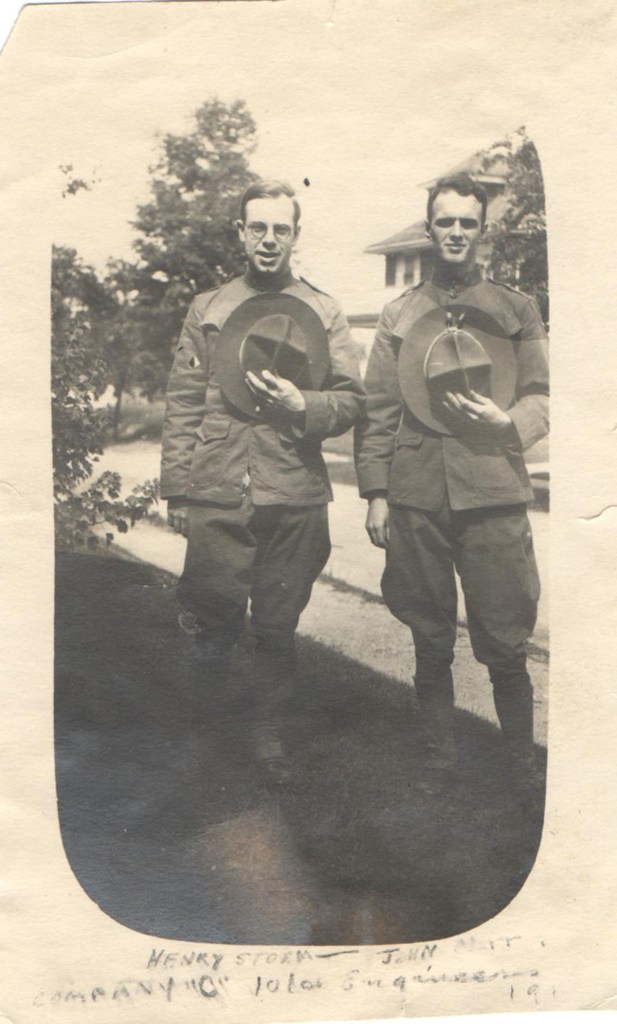
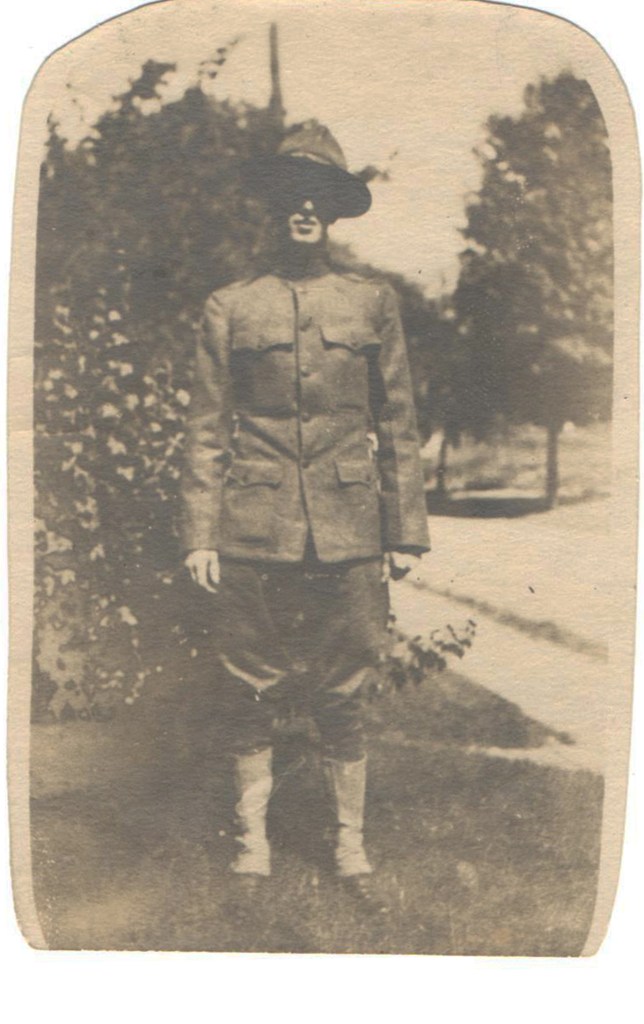
Enjoy these family photos of my grandfather, John Marr, after he returned from France in 1919.

The First Book in the White Winter Trilogy begins in April 1917, after America declares war on Germany. Overnight, the great peaceful nation becomes an international military power . . .
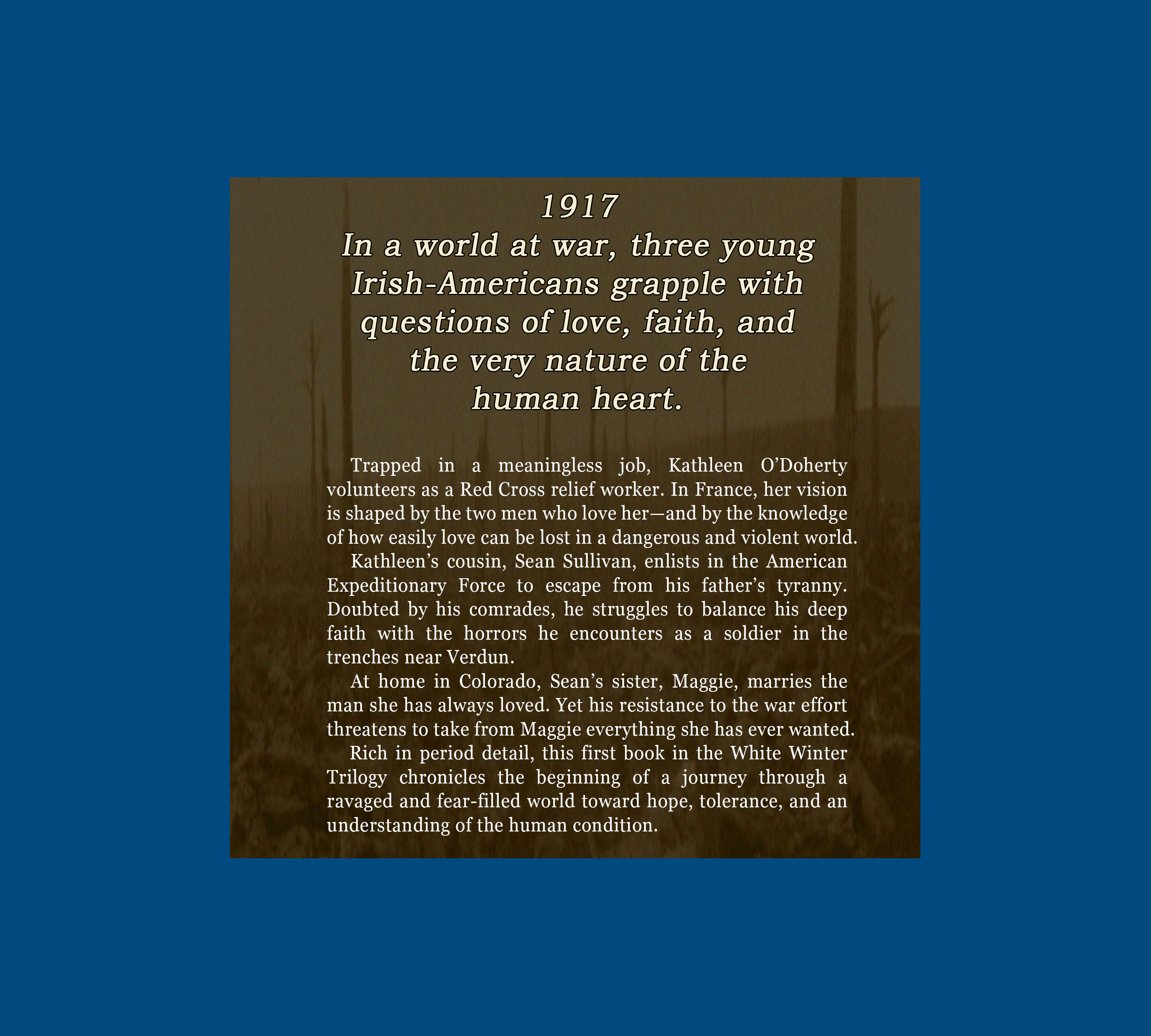
Buy White Winter: To Do Justice
To Do Justice is the first book in the White Winter Trilogy. The action of the story takes place between March 1917 and December 1917. During this time, the United States enters into the “European War” or the “Great War,” which we know today as World War I.
What I’ve found through talking with readers is that, in general, we know very little about World War I. It isn’t taught or is covered only in outline in history classes in our public schools, and we have no survivors left with us to take “Honor Flights” or to leave behind an oral or written history. But the era surrounding World War I is fascinating: it encompasses the dawning of women’s and workers rights and unions; it is the beginning of “big government” and militarization of America; and it allowed people who had never before traveled far from home to see a world they never could have imagined. Of course, they also saw the death and destruction of war and the punitive attitudes toward Germany in the aftermath of the war that allowed Hitler to rise to power.
There’s so much we didn’t learn about in school.
- Did you know that the United States had no set policy to deal with Conscientious Objectors in 1917? (Read To Do Justice and To Love Kindness for more information.)
- Did you know that there were two distinct factions of suffragists in America? The one we’ve generally heard about is that espoused by Susan B. Anthony and her followers. Yet another, more militant group existed, which felt that winning the vote was only the beginning of the battle, not the end. Among other things, they demanded access to birth control for all women and a way to end unwanted pregnancies. (Read To Love Kindness for more information.)
- Did you know that the Germans living in the United States were treated abominably during the war years? (Read To Love Kindness for more information.)
Here are the sources I used for To Do Justice:
- Gentleman Volunteers: The Story of American Ambulance Drivers in the First World War by Arlen J. Hansen
- The Long Way Home: An American Journey from Ellis Island to the Great War by David Laskin
- One Woman’s War by Anonymous
- On the Front Line: True World War I Stories edited by C.B. Purdom
- “Out Here at the Front:” The World War I Letters of Nora Saltonstall edited by Judith S. Graham
- Over Here and Over There: The Era of the First World War by Irving Werstein
- A Soldier’s Diary of World War I: France 1917-1919 by Henry Halgate Storm
- Songs My Mother Never Taught Me by Niles, Moore and Wallgren
- The Face of Battle: A Study of Agincourt, Waterloo and the Somme by John Keegan
- They Also Served: American Women in World War I by Lettie Gavin
- The West Point Atlas of War: World War I edited by Brigadier General Vincent J. Esposito
Online sources include:
- History of the 89th Division, U.S.A.
- A History of Company C, 137th Infantry Regiment, 35th Division
- In the Soldier’s Service: War Experiences of Mary Dexter
- Mademoiselle Miss: Letters from an American Girl with the Rank of Lieutenant at a French Army Hospital at the Front
- Miss Billy Married by Eleanor H. Porter
- Oildom, January 1918
- Colorado Historic Newspaper Collection
- And, of course, Wikipedia
 Laurie Marr Wasmund